
Too many white papers are written like technical manuals. They’re dense and disconnected from what the reader actually cares about.
As a result, readers end up skimming—or worse, they save a white paper for later before eventually forgetting about it altogether.
Before you spend time drafting a paper that gets ignored, it’s helpful to review strong examples. You’ll see how good papers structure their argument, present data, and keep readers engaged from the first page to the last.
Below, we’ve curated 12 white paper examples from B2B companies that know how to keep their readers’ interest. These examples go beyond generic PDFs, and are instead, carefully researched and written with a specific audience and use case in mind.
In this article, we’ll cover:
- Why is it important to look at white paper examples?
- White paper examples by audience
- Answers to common questions about writing white papers
Check out 5 white paper writers and agencies
Take a peek at our list of the top 5 white paper writers and agencies.
White paper examples: why are they important to look at?
Checking out white paper examples isn’t about copying a visual layout or borrowing ideas. It’s about seeing how strong teams craft engaging and persuasive content that earns attention and trust.
Looking at high-quality white papers, a few patterns stand out:
- How they frame a problem in a way the reader recognizes and finds relatable
- How they use data to support, not overwhelm, the narrative
- How they guide the reader toward a specific conclusion or next step
This matters because most white papers fail on execution. The topic is often relevant, but the delivery feels generic or overly technical. Strong examples show you what quality looks like in practice, helping you avoid vague messaging and content that reads like a product manual instead of a decision-making tool. This is especially valuable in B2B SaaS, where buyers are evaluating solutions amid tight budgets and long sales cycles.
White paper examples by audience
It’s important to consider your target audiences when reviewing white paper examples. After all, different audiences have different needs. The most effective white papers are tailored to their specific target audience’s preferences.
To help you make the most of our white paper examples, we’ve organized them into three categories:
1. Technical white paper examples
Technical white papers are aimed at decision-makers who manage their organization’s technology or oversee technical teams, including chief technology officers (CTOs).
2. Business white paper examples
Business white papers are written for C-suite executives, including chief operating officers (COOs) or chief financial officers (CFOs).
3. Marketing white paper examples
Finally, marketing white papers are aimed at managers in marketing, operations, and sales departments.
While it can still be helpful to look at white paper examples written for any target audience, we recommend you begin by looking at examples that correspond to your white paper’s target audience.
Quick Tip: Tired of getting AI workslop turned in by lazy agencies and freelancers? Get a research-driven white paper actually worth reading from Uplift.
Technical white paper examples
Our technical white paper examples include white papers written for CTOs and other technical decision-makers. Since these employees evaluate software solutions to find the best fit, they need to understand how each technology works and how it is implemented. As a result, these technical white paper examples are generally lengthier and more detail-oriented than white papers for other audiences.
White paper example #1: AWS
Rethinking SaaS in the Agentic Era
29 pages; 10,703 words
This white paper explores how SaaS is changing as AI systems shift from tools that respond to inputs to agentic systems that can take actions on behalf of users. AWS breaks this down into practical components, showing what needs to change across SaaS architecture, infrastructure, and application design.
One of the strong points of this white paper is its depth. For example, it gets specific about the implementation of agentic AI by discussing:
- how foundation models are accessed via APIs
- how agents maintain memory and context across tasks
- how permission layers control what actions agents are allowed to take
Beyond simply educating readers, AWS also ties in its expertise from the beginning so its services are top of mind. For instance, you can see in the white paper’s executive summary the following line:
“What makes AWS uniquely suited for agentic AI is not just our cutting-edge technology, but also our proven foundation of security, governance, scale, and reliability—critical qualities for deploying autonomous systems.”
Purpose: This white paper is aimed at SaaS leaders, CTOs, and founders exploring how to build AI-native products. It positions AWS as the infrastructure layer while providing concrete architectural patterns for building agentic systems.
See AWS technical white paper example
White paper example #2: Alteryx
AWS + Snowflake + Alteryx Analytics Cloud Platform: Technical Guide
18 pages; 4,000 words
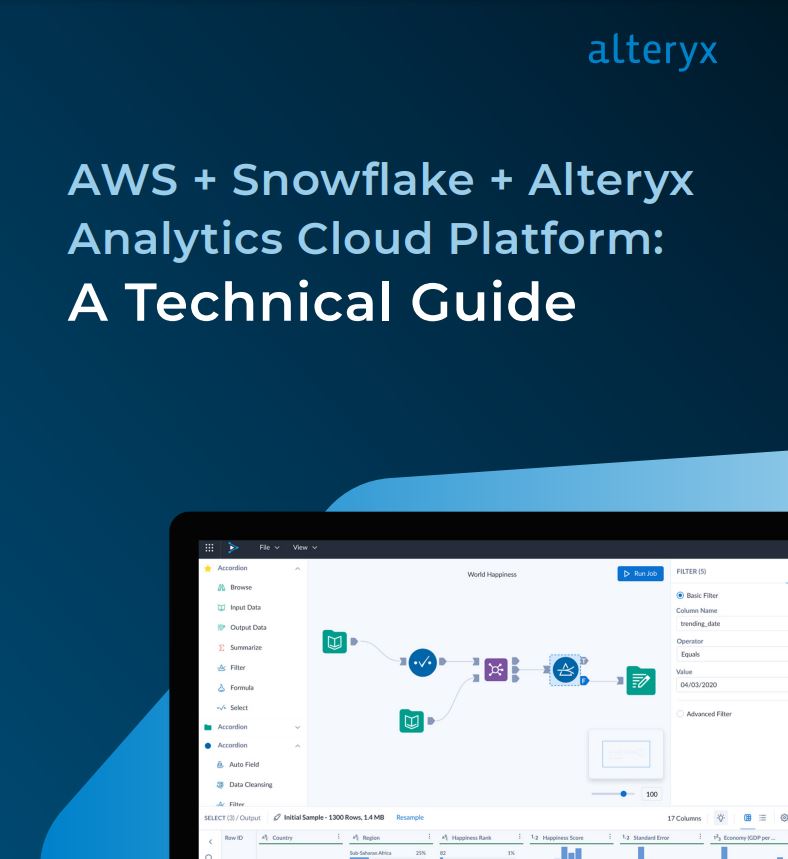
This Alteryx technical white paper example provides detailed steps for connecting and configuring your AWS instance with Snowflake and Alteryx. It also includes a variety of diagrams and graphics to help readers visualize each step.
Purpose: The white paper shows technical employees how a unified tech stack can benefit their organization, plus it walks them through the setup process. This document is likely used to cross-sell or upsell Alteryx’s services to existing customers.
See Alteryx technical white paper example
White paper example #3: Crowdstrike
Application Security Posture Management: Securing Cloud-Native Applications at Scale
27 pages; 8,100 words
This Crowdstrike technical white paper gives an overview of the current cloud security landscape and introduces application security posture management (ASPM), the core technology discussed. It also provides detailed guidance on how to operationalize ASPM.
Purpose: The white paper aims to build a strong business case for adopting ASPM technology, as it demonstrates that implementation is manageable and explains the risks of not adopting ASPM. It serves to push decision-makers toward purchasing Crowdstrike’s ASPM solution.
See CrowdStrike technical white paper example
White paper example #4: ServiceNow
Securing the ServiceNow AI Platform
47 pages; 21,115 words
This technical white paper walks through how ServiceNow secures its cloud platform across infrastructure, applications, and data.
Rather than making broad claims about “enterprise-grade security,” it breaks security down into specific layers. These include physical, administrative, and logical controls, and explains how each one works in practice.
Importantly, the white paper goes further than others by showing how security plays out operationally. It outlines:
- How data is classified, retained, and securely destroyed
- What happens during failover and disaster recovery scenarios
- How vulnerability management and penetration testing are handled across the platform
- Where responsibility sits between ServiceNow and the customer under the shared responsibility model
Purpose: This white paper is designed to answer the questions a security or compliance team will actually ask during vendor evaluation. Instead of trying to persuade with marketing language, it anticipates scrutiny. It gives CTOs, CISOs, and risk teams the level of detail they need to assess whether the platform meets internal security and regulatory requirements.
See ServiceNow business white paper example
Business white paper examples
Our business white paper examples include white papers tailored for C-suite executives, including COOs. These leaders are focused on finding the best returns on investment, so they’re interested in white papers that discuss high-level issues and the business case for adopting new technology.
Business white papers are typically concise and emphasize executive summaries, strategic benefits and potential impacts on an organization.
White paper example #5: HackerOne
The Executive Guide to Human Security Testing
11 pages; 2,400 words

This example of a white paper from HackerOne offers a look at human security testing. It provides reputable statistics to highlight the risks of security inaction and the benefits of implementing human security testing.
It also outlines HackerOne’s human security testing management service and discusses use cases. The inclusion of company photography makes the white paper feel more personalized and authentic.
Purpose: This business white paper example builds a high-level business case for considering HackerOne’s human security testing management service. Likely targeting the middle to bottom of the sales funnel, it aims to persuade executives of the solution’s value and urgency.
See HackerOne business white paper example
White paper example #6: Azure
Digital Transformation and the Art of the Possible: An Innovation Opportunity with SAP and Microsoft
15 pages; 3,200 words

This Azure white paper example encourages business leaders to embrace digital transformation so that their business stays competitive, rather than being left behind. Although its dense text and stock images are not ideal, the business white paper example includes a persuasive customer video testimonial. Additionally, the white paper’s infographics help make its contents easier to digest.
Purpose: The white paper aims to excite executives about the potential benefits of digital transformation. By listing advantages and showcasing how other companies are advancing, it seeks to motivate business leaders to adopt Azure’s solutions and avoid falling behind competitors.
See Azure business white paper example
White paper example #7: Okta
Adaptability Imperative Report
20 pages; 3,100 words

This white paper, based on a survey of 100 chief executive officers (CEOs), COOs and CFOs of large global enterprises, explores current business priorities and future challenges. It emphasizes the importance of adaptability for business success, using charts and graphs to present data in an easily digestible format.
Purpose: This business white paper example aims to establish Okta as a thought leader by providing original research and unique insights.
See Okta business white paper example
Marketing white paper examples
Our marketing white paper examples target managers across various departments, including marketing, sales and operations. Since these managers are actively engaged in day-to-day operations, they seek practical solutions to overcoming challenges and improving performance. As such, marketing white papers are usually concise, address specific pain points and offer specific strategies for success.
White paper example #8: Cvent
Scaling Your Event Program for ROI
13 pages; 2,100 words

This example of a white paper describes how to scale event programs while maximizing ROI and efficiency. It includes original research conducted by Forrester, so the document is especially valuable to readers. It also positions Cvent as a thought leader. Charts and graphs facilitate readers’ understanding.
Purpose: This marketing white paper example aims to establish Cvent as a go-to solution and thought leader in the event marketing space by offering insights and original research.
See Cvent marketing white paper example
White paper example #9: Fleetio
Budgeting 101 for Fleet Managers
11 pages; 2,400 words
This marketing white paper example provides practical information on how fleet managers can monitor costs through better fleet financial planning. It includes Q&As, pros and cons and examples, ensuring high value for its intended audience.
The white paper also features infographics, charts and design elements to help readers stay engaged and better understand the content.
Purpose: This marketing white paper example serves as a top-of-funnel resource for fleet managers who are just becoming aware of their budgeting challenges. It aims to engage and educate them, positioning Fleetio as a valuable resource early in their problem-solving journey.
See Fleetio marketing white paper example
White paper example #10: MessageGears
14 Strategies to Deliver Moments-based Messaging at the Enterprise Level
5 pages; 1,200 words
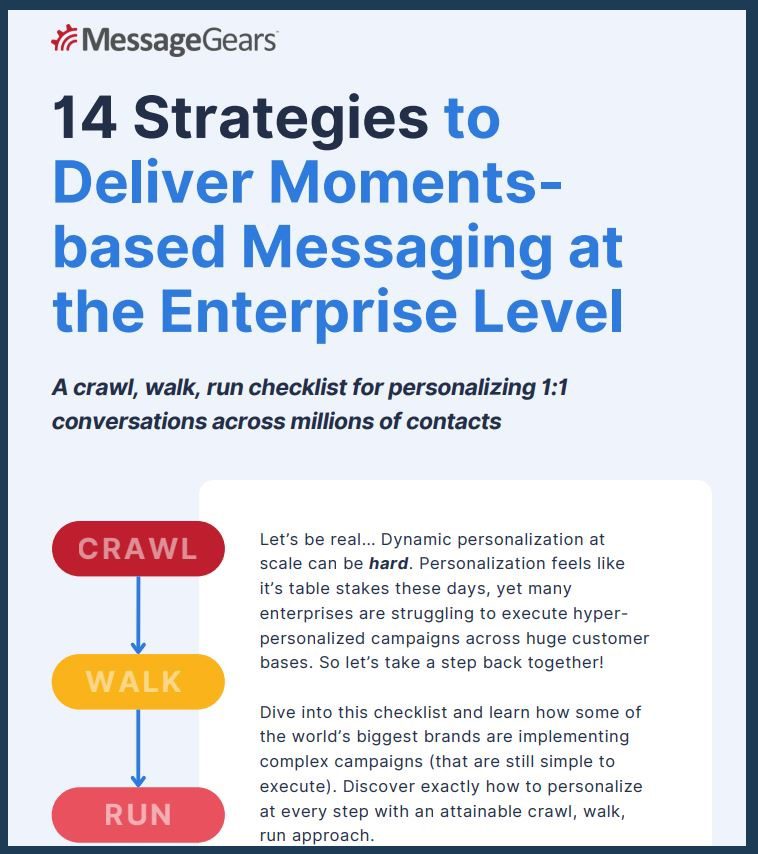
This hybrid marketing white paper example combines a how-to guide and checklist to deliver interactive and engaging content. It also provides clear steps to deliver moments-based messaging and offers helpful examples, making it a practical reference document.
Purpose: This white paper serves as a top-of-funnel resource for an audience seeking tips on solving specific messaging challenges. It aims to engage and educate potential customers while positioning MessageGears as a solution provider for their issues.
See MessageGears marketing white paper example
White paper example #11: Salesloft
The New Era of Revenue Growth: Meet the Predictive Revenue System
8 pages; 3,354 words

Salesloft’s white paper makes its thesis clear from the start: traditional CRM systems weren’t built to drive predictable revenue; they were built to record what already happened. The problem with this, the paper points out, is that revenue leaders still rely on delayed reports, incomplete data, and instinct to make high-stakes decisions.
Instead of staying abstract, the paper backs this up with specific data. For example, it cites research showing that only 34% of enterprises have a defined revenue framework. It also points out sellers spend up to 25 hours a week on tasks that could be automated or simplified. These figures directly support the argument that current systems aren’t working.
Another strong section explains how modern revenue teams need to combine structured data, such as CRM stages, with unstructured signals. These include emails, meetings, buyer intent, and conversation data.
Rather than listing these vaguely, the paper calls out specific inputs like:
- Email activity
- Conversation intelligence from calls and meetings
- Marketing engagement data
- Contract and deal data
This makes the problem and the proposed solution much easier to visualize.
Purpose: This white paper is aimed at CROs, sales leaders, and RevOps teams who are frustrated with inconsistent pipelines and unreliable forecasts. Rather than pitching a product directly, it reframes how revenue should be managed. This positions Salesloft’s Predictive Revenue System as a more structured, data-driven alternative to traditional CRM.
See Salesloft marketing white paper
White paper example #12: DocuSign
Implementing Electronic Signatures and Digital Signatures with DocuSign
12 pages; 3,061 words
This white paper from DocuSign tackles a practical question many teams face: what kind of signature do we actually need and how do we implement it correctly? Instead of treating e-signatures as a single category, it breaks down the differences between simple electronic signatures, advanced signatures, and digital signatures. It also explains where each type applies.
For example, it explains that a simple e-signature (like clicking “I agree”) is enough for low-risk agreements. On the other hand, digital signatures built on Public Key Infrastructure (PKI) are required for regulated use cases because they verify identity and detect tampering.
The paper also applies this info in real compliance scenarios. It references frameworks like eIDAS in the EU, showing how signature requirements change depending on geography and industry. This is something many companies overlook when scaling internationally.
Where DocuSign’s white paper stands out, though, is in how it translates policy into workflow. Instead of staying theoretical, it walks through:
- How to choose the right signature level based on risk
- How to apply identity verification for higher-assurance signatures
- How to structure a signing process so documents remain legally enforceable and tamper-evident
Purpose: This white paper is designed for legal, compliance, and operations teams responsible for implementing secure signing workflows. It removes ambiguity around “what counts as a valid signature” and positions DocuSign as a solution that can handle both everyday agreements and highly regulated transactions without adding complexity.
See DocuSign marketing white paper example
White paper examples offer valuable insights
Looking across the examples above, the strongest white papers share several traits that drive readership and results:
- They speak to a specific reader, not a general audience. Technical papers dive into implementation for CTOs, business ones focus on ROI for execs, while marketing ones offer tactics for managers. When a reader feels like a document was written for them, they keep reading.
- They address a real, specific pain point. The strongest white paper examples all start with a pain point the reader already feels. HackerOne dives into security testing, Fleetio addresses fleet budgeting, MessageGears looks at enterprise messaging, and so on. The white paper wins the reader’s attention by naming the problem clearly before offering a solution.
- They present information in a logical sequence. Good white papers read like a well-built argument: here’s the problem, here’s why it matters, here’s the evidence, here’s what to do about it. Crowdstrike’s ASPM guide is a good example. It introduces the landscape, establishes urgency, and then walks readers through implementation before presenting the solution.
- They use visuals to support the writing. Charts, infographics, and diagrams appear throughout these examples, but never as decoration. Visualizations make complex content easier to navigate.
- They balance education with subtle guidance. The best white papers avoid hard sells, instead showing how a better approach (or solution category) works. This builds authority and moves buyers naturally toward your offering.
- They’re designed for the reader’s journey. Top-of-funnel pieces like Fleetio’s are shorter and checklist-style, while deeper technical ones provide step-by-steps. Length varies (5–25+ pages), but usefulness per page matters most.
For more on how to put these principles into practice, check out our guide on how to write a white paper.
Need some help with your next white paper?
A strong white paper can build trust if it’s tailored to your audience and loaded with a business’s real expertise. The examples above show what that looks like.
At Uplift Content, we create white papers for B2B SaaS companies that are built to hold up under scrutiny. Every white paper we produce is written by a human expert who understands your audience and knows how to structure ideas.
If you’re planning your next white paper, check out our white paper writing services and get in touch.
FAQs
How long should a white paper be?
Most white papers fall between 5 and 20 pages (1,200–8,000+ words), depending on the audience and complexity of the topic. Technical audiences may expect more depth, while executives prefer concise, insight-driven content.
Can I use AI to write a white paper?
AI can help with outlines, research summaries, or initial drafts, but it shouldn’t be the final product. Buyers can spot generic, hallucinated, or shallow content quickly, especially in B2B SaaS, where credibility is everything. The strongest white papers come from human expertise, original insights, and thoughtful editing. Use AI as a tool, not the writer.
Where can I find a white paper writer?
You can work with specialized B2B agencies like Uplift Content that focus on research-driven storytelling over templated output. We produce human-written white papers, case studies, and thought leadership that actually resonate with buyers and support revenue goals. Our white paper writers dig deep into your product and audience for narratives that stand out.
What’s the difference between a white paper and an ebook?
White papers are more formal, problem-solution focused, and often data-heavy for decision support. Ebooks tend to be lighter, broader, or more visual. Both generate leads, but white papers typically target later-stage buyers.
How long does it take to produce a white paper?
You should budget four to eight weeks for a quality white paper. That typically includes topic research and brief development, primary or secondary research, an outline for client review, a full draft, revision rounds, and final design.
