
Welcome to the future—where software designs itself, voice clones host podcasts, and AI chatbots politely answer your every question.
That last one is a particular game-changer for digital marketers. For decades, SEO has reigned over the World Wide Web by shaping how brands got found online. But now, buyers aren’t just typing keywords into Google anymore. They’re asking full questions in ChatGPT, Gemini, or another AI platform, and expecting a complete answer on the spot.
That shift is driving all the buzz around answer engine optimization (AEO).
So, should your company invest in AEO, or is it just another shiny trend? Below, we break down exactly what AEO is, the biggest concerns marketers have about AEO, and how to know if it’s the right move for your business.
What is answer engine optimization (AEO)?
First things first: Answer engine optimization (AEO) is the practice of creating and structuring content so that AI-powered platforms like ChatGPT can easily understand, extract, and cite it when generating answers for users.
You may also see it referred to as GEO (generative engine optimization) or LLMO (large language model optimization). Different names, but the goal is the same: make your brand the source AI systems turn to when someone asks a question your business can answer.
AEO isn’t just about showing up in ChatGPT, though that’s where a lot of the conversation starts. It also covers:
- Google’s AI Overviews, which now appear in more than half of all Google searches
- Gemini
- Grok
- Microsoft Copilot
- Perplexity
Each of these platforms has its own citation patterns and content preferences, which adds another layer of complexity to optimization.
Does AEO replace traditional SEO?
A common misconception is that AEO is a replacement for traditional SEO. It isn’t—though they’re closely related.
Traditional SEO focuses on helping search engines discover and rank your content. Meanwhile, AEO deals with making your content easy for AI systems to interpret and reference when generating answers.
| SEO | AEO | |
| Primary Goal | Drive website traffic | Build brand visibility and authority |
| How? | Rank highly in search engine result pages (SERPs) | Get cited, quoted, or summarized in AI-generated answers |
| User Behavior | Click-based search | Conversational search |
| Success Metrics | Organic traffic, ranking keywords, SERP rankings | Mentions and citations in AI responses, share of voice in answers |
While strong SEO helps your content become visible at the top of search engines, AEO makes your content the direct answer.
Why does AEO matter for your business right now?
Just like how the internet upended the buyer journey by introducing the concept of shopping online, the rise of AI has changed how consumers discover and buy products. Understanding how AI tools have changed the modern buyer journey helps highlight why AEO is necessary if you want to attract visitors through online search.
1. Buyers are increasingly using AI to help make purchase decisions
Before AI-powered answer engines, the buyer journey relied heavily on traditional search engines, primarily Google, and the rules of SEO. Buyers actively searched, clicked through results, and pieced together information themselves across multiple sources.This meant a click-driven, multi-tab research process.
However, new research shows that many buyers now turn to AI assistants before visiting company websites or running traditional searches.
- Google Gemini’s roughly 750 million monthly users report turning to it primarily for product research, price comparison, and shopping.
- As of early 2025, 52% of American adults use AI large language models, with ChatGPT leading at 72% among users.
- About 48% of U.S. consumers who have used AI rely on it daily, 85% use it at least weekly, and 55% turn to AI for product research on a weekly basis.
- In the U.S., Google desktop searches per user declined almost 20% from 2025 to 2026.
To be clear, people still search for information using Google. However, AI has become a new step in many users’ research and decision-making journeys.
2. B2B buyers have adopted AI even faster
The shift in buyer behavior is even more pronounced in B2B environments, where research-heavy purchasing decisions are common.
In fact, research on B2B buyers from the software company Responsive shows:
- Generative AI has overtaken traditional search for about 25% of B2B buyers.
- Nearly two-thirds of buyers use AI as much as or more than search when researching vendors.
- In the technology sector specifically, 80% of buyers use GenAI at least as much as search for vendor research.
- More than half of tech buyers (56%) report using chatbots as a top source for discovering new vendors.
We’re not surprised. Across all kinds of industries, the B2B buying cycle is known for being long and complex because of the need for review and input from multiple stakeholders. Given this drawn-out decision-making process, it makes sense to use AI to simplify one of the most tedious aspects—the research stage.
3. AI visibility affects organic search traffic
AI-generated summaries are also changing how traffic flows through search results.
- When a Google AI Overview appears in search results, organic click-through rates drop an average of 61%.
- Despite this, brands cited within AI Overviews see 35% higher organic clicks than brands that aren’t.
These data points may seem contradictory, but they’re not.
For example, when someone searches a keyword in Google, they’ll see an AI Overview addressing their query. Embedded within the AI Overview are brand citations, which users can click to find out the exact source of the information.
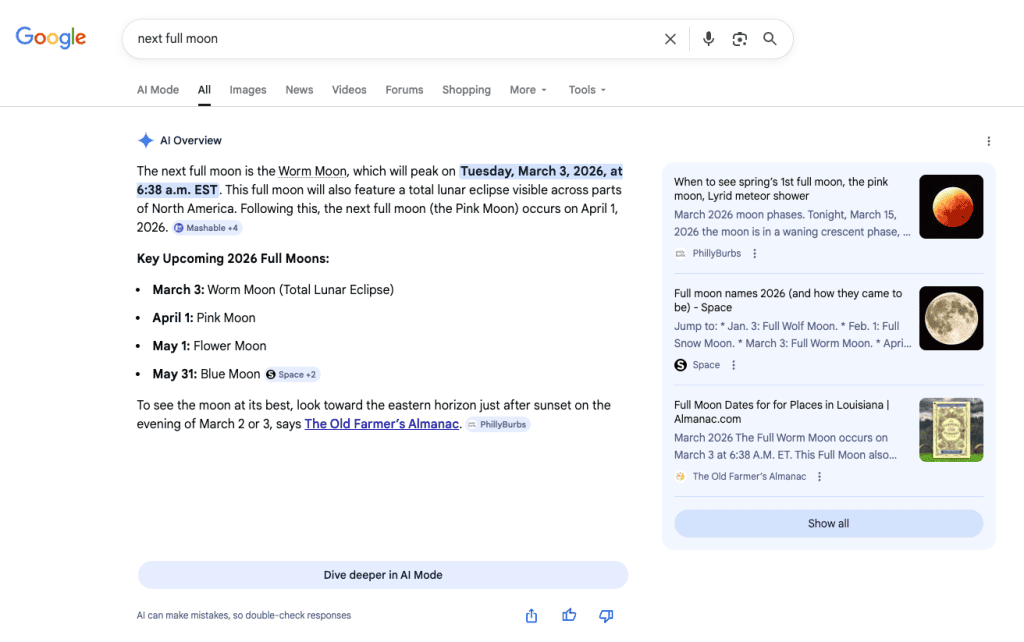
Users may not scroll further down the search results page, which is why organic click-throughs have dropped overall. However, someone interested in reading more about the answer may click on one of the cited brands in Google’s AI Overview.
So while AI summaries are compressing traditional search traffic on one hand, they’re also rewarding the brands they cite on the other.
4. The adoption gap is a competitive opportunity
While some brands have gained early AEO traction because of the authority and visibility they built through SEO, that advantage only goes so far without deliberate optimization for AI discovery. Simply put, a company that performs well in traditional search will not automatically perform well in answer engines.
And as discussed earlier, a lot of data shows that buyer behavior is shifting quickly. Two more stats if you’re not already convinced:
- The number of ChatGPT prompts grew by nearly 70% in the first half of 2025, while shopping-related searches on the platform doubled over the same period.
- AI-native platforms like ChatGPT and Perplexity now rank among the top sources of qualified leads, sitting just behind social media.
Most brands haven’t prepared or adapted to this shift, with only 11% of B2B companies saying that the majority of their content is prepared for AI discovery. That disconnect between where buyers are searching and where brands have optimized creates a competitive opportunity ready for the taking.
Who’s already winning in AI search?
To uncover which brands have already gained strong visibility in AI search, Semrush conducted research on which companies appear most often in answers generated by ChatGPT and Google’s AI search features. Their work, aptly titled the “2025 AI Visibility Award Winners,” looked at three types of AEO success based on AI share of voice—how frequently a brand is mentioned and cited—during the second half of 2025:
- Category Leaders: Brands dominating their vertical with the largest overall share of voice
- Growth Engines: Brands that saw the biggest growth in their share of voice
- Challengers: Brands under 5 years old that have the greatest share of voice
Among these winners were Microsoft, Intuit, and Anthropic—which we break down in more detail below.
Microsoft
According to Semrush’s data, Microsoft is a category leader in the digital technology and software space, as it’s frequently cited in AI answers about:
- Cloud platforms: AI responses often reference Microsoft’s cloud ecosystem when explaining infrastructure, hosting applications, or scaling enterprise systems.
- Developer tools: When users ask about coding environments or software development workflows, AI responses often mention tools such as Visual Studio and GitHub.
- Productivity software: Questions about workplace collaboration, file sharing, or document creation often bring up tools from Microsoft 365, including apps such as Word, Excel, and Teams.
This dominance is no surprise given that Microsoft is one of the leading providers in the cloud platform market. At the end of 2025, it led with 52.86% in AI share of voice, followed by Google (41.25%) and Amazon (25.40%).
But what would make Microsoft’s answers come out on top over these two other major players in the market?
Semrush’s research notes that Microsoft and Google “naturally feature heavily in conversations across the web for their industry and have incredibly wide digital ecosystems of their own also fueling visibility.”
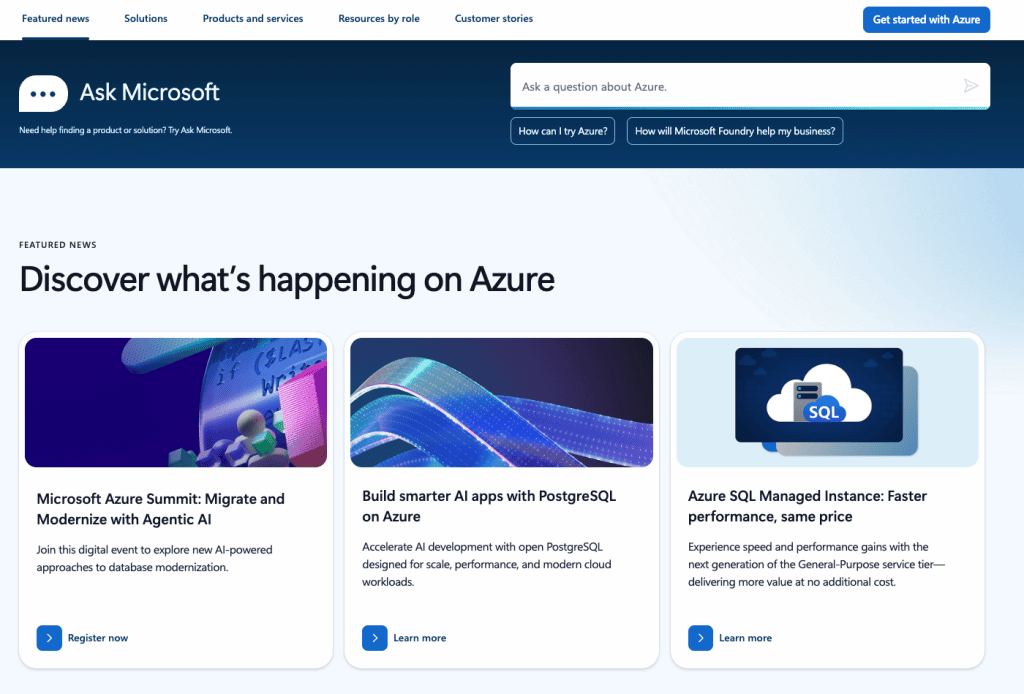
You can see this with Microsoft Azure, a content-rich subdomain dedicated to Microsoft’s cloud computing platform. From industry news to customer stories to support articles, the site’s extensive coverage of Microsoft’s cloud ecosystem and developer tools no doubt cement Microsoft’s visibility in AI-generated responses.
Intuit (QuickBooks and TurboTax)
In the Growth Engines category, Intuit also stood out in Semrush’s research as a brand that significantly grew its AI visibility within the business and professional services space. Specifically, its two products QuickBooks and TurboTax saw consistent growth in AI-generated explanations of financial management.
- Accounting: QuickBooks is frequently referenced in AI answers about bookkeeping, invoicing, and financial tracking.
- Taxes: TurboTax often appears in AI responses about filing taxes, understanding deductions, and preparing annual returns for individuals and small businesses.
- Small business finance: Intuit’s ecosystem is regularly mentioned when discussing how small businesses track expenses, manage finances, and stay compliant with tax requirements.
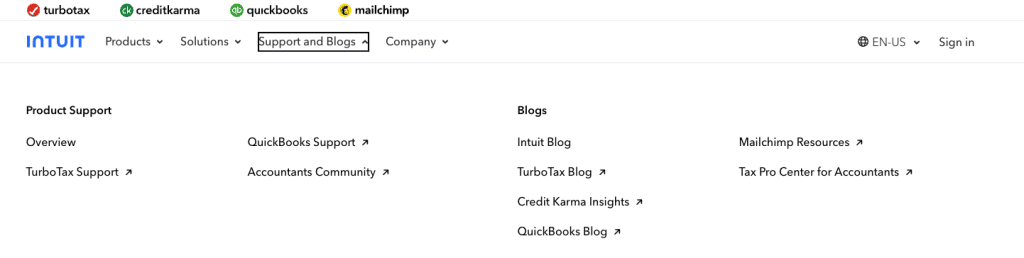
This visibility makes sense when you look at how much educational content surrounds Intuit’s products. From QuickBooks to TurboTax to Credit Karma, the company has spent years publishing guides, help articles, and small-business resources that explain accounting basics, tax rules, and financial workflows in plain language. That depth of practical content gives AI systems plenty of credible material to draw from.
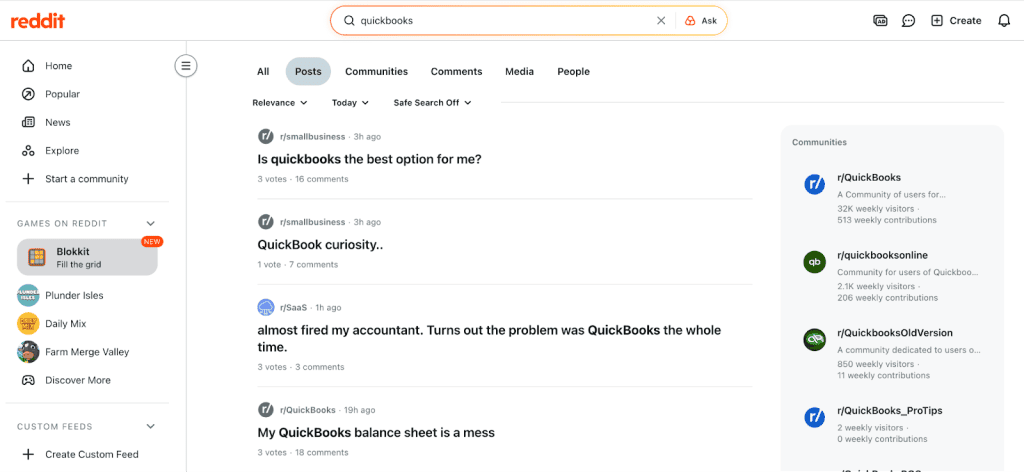
Finally, there’s also the longstanding history of Intuit’s software products, used by millions of small businesses. When people ask questions about bookkeeping or taxes, AI tools often surface examples tied to QuickBooks or TurboTax because those products are already strongly associated with the underlying topics on Reddit and other online forums.
Anthropic
Newer players are entering the mix as well. In Semrush’s Challengers category, AI company Anthropic and its assistant, Claude, have gained recognition for their ability to handle technical and coding-related queries.
Anthropic often appears in discussions about:
- Technical problem-solving: Claude is frequently mentioned in AI conversations involving complex reasoning, structured analysis, and technical explanations.
- Coding and development workflows: Developers often reference Claude when discussing AI tools for debugging code or assisting with software development tasks.
- Responsible AI development: Anthropic is also cited in discussions about AI safety and model alignment, areas where the company has positioned itself as a leading voice in the industry.
Much of this visibility comes from Anthropic’s strong positioning within the developer and AI research communities. Consider its research page, which lists studies and articles dating as far back as 2021. Topics cover all facets of AI, like how it impacts the labor market and its implications for real-world elections.
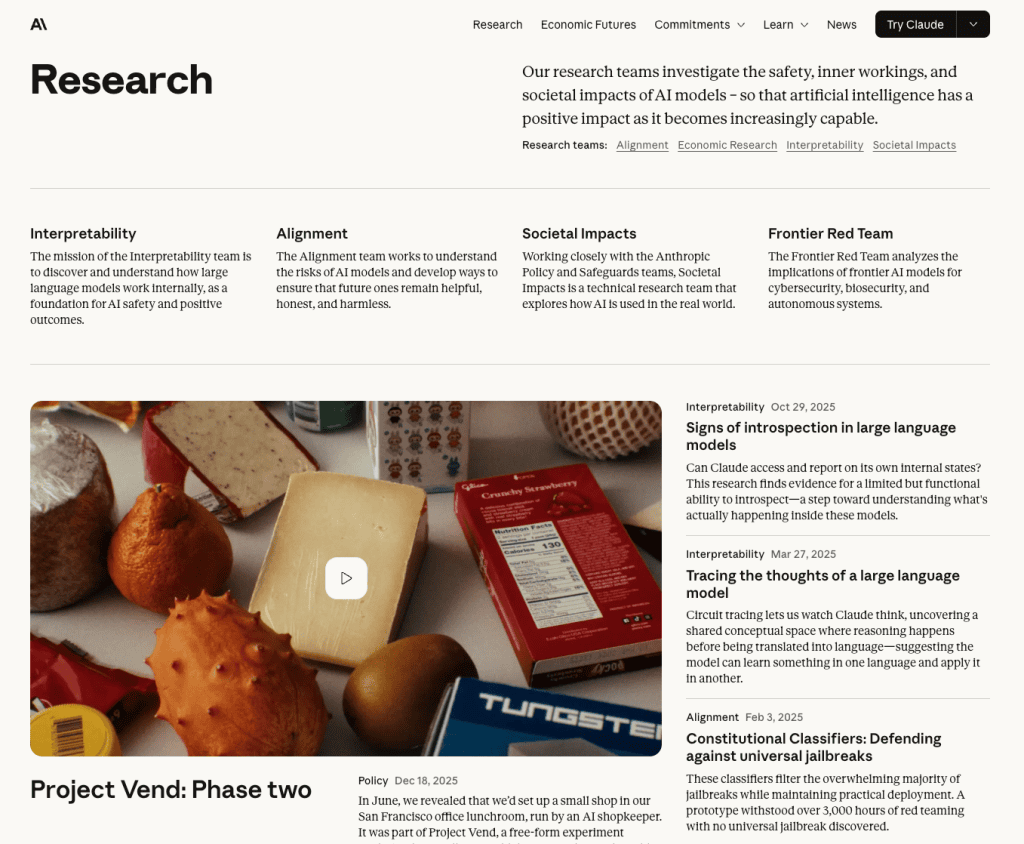
By sharing this in-depth research and other similarly rigorous explanations about how its models work, Anthropic establishes incredible authority that few other brands can replicate. Its content gives AI systems reliable sources to reference when answering complex technical questions.
These examples highlight an emerging pattern. Brands that publish complete and thorough information—not surface-level content—about topics within their specific category are more likely to appear in AI-generated answers.
The Top 3 Concerns About AEO
Interest in AEO is growing quickly, but many marketers still approach it with skepticism.
1. Measurement is still difficult
Unlike organic rankings, AI citations are harder to track consistently. Ask ChatGPT the same question twice, and you may get different sources cited each time.
That variation happens because AI systems generate answers dynamically rather than pulling from a fixed list of ranked pages. Small changes in phrasing, context, or available training signals can influence which sources the model references.
Because of this variability, attribution becomes challenging for marketers who need clear data to justify budgets.
2. The Zero-Click Concern
Even when your brand earns a citation in an AI answer, users may not click through—hence, “zero clicks.”
Why don’t they click? Depending on the user’s question or prompt, the AI-generated response may provide an answer that does not warrant additional browsing. As a result, referral traffic from AI tends to be smaller than the large numbers of organic traffic seen in the pre-AI era.
The fact that AI referrals may account for a small share of total traffic makes it tempting to dismiss AEO as a visibility play rather than a meaningful acquisition channel. But the quality of that traffic tells a different story.
AI-referred visitors convert at significantly higher rates than average website traffic, because they arrive having already researched, compared alternatives, and formed a specific question. Lower volume, meaningfully higher intent.
It’s also worth mentioning that the zero-click issue is not new. Google first introduced Featured Snippets—short excerpts of extracted web content placed at the top of SERPs—in 2014.
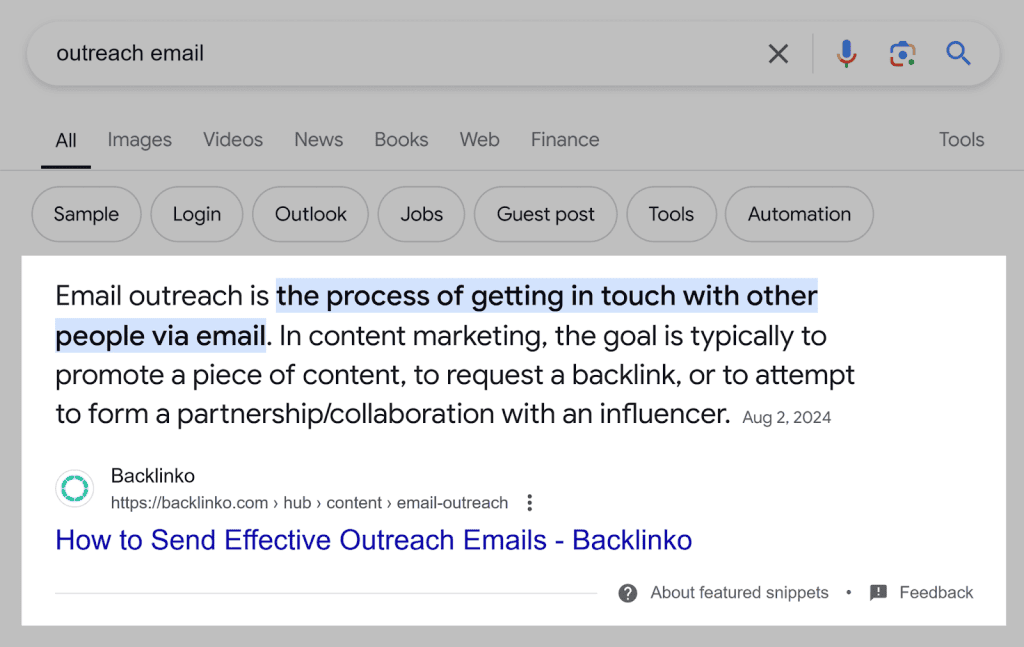
While Featured Snippets drove traffic to cited content, they also answered a user’s search query in such a way that the user did not necessarily need to click into any search results. Despite that, the Featured Snippet remained a coveted search position because its placement at the top of search results still ensured more clicks than appearing further down the results page.
All this to say, the zero-click “problem” did not make traditional SEO less important as a marketing strategy—and the same can be said for AEO today.
3. SEO rankings don’t guarantee AI visibility
There’s also a widespread assumption that strong SEO performance automatically translates into AI visibility. It doesn’t. Research from Ahrefs found that:
- Only about 12% of the URLs cited by AI systems actually rank in Google’s top 10 for the same prompt.
- AI systems tend to prioritize clear expertise and structured answers.
Ranking and being cited are two different things.
In other words: A brand may rank well in traditional search yet rarely appear in AI-generated responses. This tends to occur if the brand’s content is not comprehensive or if it’s not structured in a way that AI systems can easily summarize.
Should your company invest in AEO?
AEO is worth considering if:
- Your product or service isn’t an impulse buy
- Your buyers ask detailed questions and conduct a lot of research before making a purchase
- Your company has meaningful, one-of-kind proprietary data that can be shared
- Your brand relies on expertise and authority to build trust with potential customers
In any one of these scenarios, AEO can help bring your expertise up earlier in the buyer’s research process. This, in turn, increases the likelihood that your brand gets seen instead of never being acknowledged by AI.
Ready to build your AEO foundation?
AI assistants and search summaries now shape how people research problems, compare solutions, and build shortlists. Brands that provide clear, helpful expertise are more likely to appear in those answers.
Building that visibility, however, takes thoughtful, well-structured content that AI systems can easily understand and reference. At Uplift, we help companies create research-driven content designed for both search engines and answer engines.
Curious how your brand could show up in AI-generated answers? Explore Uplift’s AEO content services to see how we can help you build a strong foundation.
